Tuesday, 10 March 2015

'Guy Bourdin: Image Maker' at Somerset House

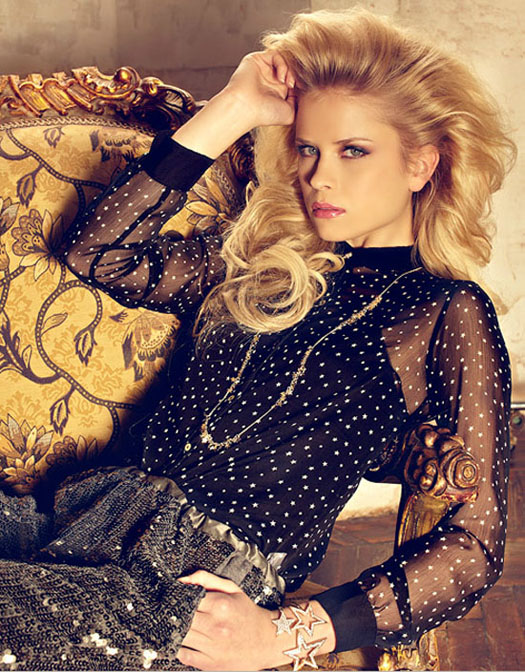
Charles Jourdan, Spring 1979 © The Guy Bourdin Estate, 2014/Courtesy A+C


Guy Bourdin: Image Maker has entered its final week at Somerset House and if you love fashion photography this is one exhibition you don't want to miss. Frequently hailed as one of the greatest fashion photographers of all time, this protégé of the great Man Ray was certainly one of the most fascinating.

The exhibition features over 200 works, including previously unseen material from Bourdin's estate. Exhibition prints, layouts, polaroids, contact sheets, transparencies, paintings, sketches, notebooks and even film, are combined to offer a comprehensive look at the work of one of the 20th century's most iconic photographers.

Alongside Helmut Newton, Bourdin's work graced the pages of French Vogue for several decades, heavily influencing the generations of fashion photographers who would follow in his footsteps. Bourdin was formerly a painter and his photography skills were entirely self-taught, allowing a freedom when shooting fashion products that perhaps explains how he took the genre and turned it on its head. Where the product and its promotion were previously at the heart of fashion photography, for Bourdin they were of less importance than his own vision and the image as a whole.

Bourdin created something new. His photographs were amongst the first to capture a brief moment of a more complex narrative, then place the product within that moment. These narratives range from the provocative and glamorous to the surreal and mysterious. The most memorable are dark and disturbing, often hinting at something sexual and violent. The women in his images frequently appear to be dead or injured, resulting in criticism and claims that he objectified women.

Pentax Calendar, 1980 © The Guy Bourdin Estate, 2014/Courtesy A+C


French fashion designer Charles Jourdan worked with Bourdin on his advertising campaigns for many years, and it is some these images (and an accompanying film), that you see first when you enter the exhibition. In 1979 Bourdin shot a campaign called 'Walking Legs', which entailed driving around quintessentially English landscapes and shooting Jourdan's shoes on two mannequin legs in various poses. It is incredible how just the lower legs and shoes can hint at a much bigger story, allowing the viewer to interpret each image in their own way. It is also interesting to see how well Jourdan's designs have withstood the test of time. In some images the quintessentially seventies cars in the background look as dated as you would expect, while the shoes have lost none of their appeal!


Charles Jourdan, Autumn 1979 © The Guy Bourdin Estate, 2014/Courtesy A+C

Bourdin was a perfectionist and subsequently he was heavily involved in his layouts for French Vogue. It speaks volumes of the regard in which he was held that the editors allowed him to see his work through from conception to completion in the magazine. Despite his strong vision and need for editorial control, it is interesting that he had little desire to preserve his work, even reportedly once requesting that it all be destroyed upon his death. He rejected the Grand Prix National de la Photographie and refused various exhibition and book offers. The first book of his work wasn't published until a decade after his death.


Vogue Paris, May 1970 © The Guy Bourdin Estate, 2014/Courtesy A+C

It is Bourdin's unwavering vision and limitless creativity that makes his work so appealing and memorable. He was an artist and a storyteller and the reason that he succeeded in fashion photography is because his stories were strong enough to sell products. Most impressive is the fact that he was successful in this field despite an apparent disregard for conventional notions of beauty, good taste and the traditional portrayal of products.

Many of the images in the exhibition are difficult to decode and open to personal interpretation. It is impossible to view Bourdin's work without attempting to fill in the blanks, asking 'who is the girl in the picture and what is her story?' These images are compelling; some are overwhelming in their beauty, while others they are so uncomfortable that you have to walk away.

Bourdin has inspired many of today's great fashion photographers including my personal favourite, Tim Walker, whose images are equally fuelled by stories that take priority over the product being sold. However if viewing Walker's most memorable work feels like you are entering a dreamland, Bourdin's feels more like a nightmare. Dark, foreboding yet equally impossible to forget.


Charles Jourdan, Autumn 1970 © The Guy Bourdin Estate, 2014/Courtesy A+C


See Guy Bourdin: Image Maker at the Embankment Galleries, Somerset House, until Sunday 15th March. £9, daily 10.00-18-00 (last admission 17.15) and until 21.00 Thursday (last admission 20.15). For more information and tickets visit www.somersethouse.org.uk
SHARE:

Tuesday, 10 June 2014

Sarah Louise Bennett on the highs and lows of music photography

Music photographer Sarah Louise Bennett first came to my attention when I saw the fantastic photographs she took at the Taking Back Sunday gig at Koko in February. Always on the look out for images that are infinitely superior to my own, I got in touch and she kindly let me use them on Rock & Runway. Realising that we like a lot of the same bands and wanting to feature more of her brilliant work, I took the opportunity to interview her and find out more about the highs and lows of being a music photographer.

Alkaline Trio at The Forum which I reviewed in April

 Sarah has been interested in photography since she was just 14, and since studying at Nottingham Trent University, she has been shooting a mix of live music and portraiture, which takes her all over the country. Based between Reading, London and Oxford, she kindly took time out of her busy schedule to answer a few questions.

How did you get into photography?
I was given a terrible point and shoot camera for my 14th birthday and took it absolutely everywhere with me – obviously it joined me when I went to my first proper gig. After that gig, one of the band members found my photos on MySpace (yeah, it was a while ago!) and said they really liked them. In retrospect, he was probably just being kind – they were awful photos! – but that little bit of encouragement really sparked the idea of exploring music photography properly for me.

Taking back Sunday

Baby Godzilla at ArcTanGent 2013

What camera do you use?
A Nikon D700. My primary lenses are Nikon's 24-70mm f/2.8, 50mm f/1.8 and I also use their SB-910 flash.

Do you prefer colour or B&W? Do you do much work in post?
I tend to stick to colour if I can, I'm a sucker for cool production and lighting design so I want to try and capture that too. Some things just don't photograph well though. Red light for example is notoriously tricky to shoot in, digital cameras just struggle to process it, so those shots tend to need more in post. Otherwise I tend to do basic adjustments such as exposure, levels and cropping if the shot needs it.

How would you describe your style?
I don't want to take photos of people on stage with instruments, I want to take pictures of passion and emotion; that's what good music is about for me.

Funeral For A Friend at Slam Dunk South 2013

What's the biggest challenge for music photographers?
Lighting, or lack of it, can be an absolute nightmare, but that's something you can try and prepare for with the right gear, or salvage in post if you have to! I'd say the biggest challenge across the industry is the devaluation of music photography as a whole. These days, music photographers are a dime a dozen, and it takes a lot of time and hard work to gain respect and trust from bands. Ultimately, I do this because I love photography and music, and I want to work with other creatives and offer them a service.

Fall Out Boy at Wembley Arena 2014


Which are your favourite music festivals? Are you going to any this year?
There are so many great festivals around at the moment; it's my favourite time of year because you come across so many bands that you might not catch otherwise! My absolute favourite is Reading. I grew up in the town but my parents weren't keen on the idea of me going to the festival when I was younger (perhaps they'd seen some of the shenanigans that go down first hand!). As a kid, it was always this thing of awe that was just out of reach, so finally getting to photograph the festival last year was a real highlight. I'm hoping to shoot it again this year as well as Sonisphere, 2000 Trees, Truck, Merthyr Rock and ArcTanGent. Plus I covered Hit The Deck and Slam Dunk Recently and I'm confirmed for Download!


Gnarwolves at 2000 Trees 2013


 Which photographers do you admire/inspire you most?

There are so many! In terms of music photography, Danny North, Adam Elmakias and Todd Owyoung are some that stick out – they're all photographers who take beautiful photos but also have great business sense and work ethic.

If you could photograph any band past or present, who would it be?
Nirvana, Queen and Jimi Hendrix were all extremely talented and renowned for their incredible live shows – I just wish I'd been around to capture them! I've been incredibly lucky to have crossed a lot of awesome bands off my bucket list though, but there's nothing like shooting an up-and-coming band that takes you by surprise.

Josh Homme


Check out more of Sarah's fantastic images on her website and social media:

SHARE:

Wednesday, 22 January 2014

Music photographer Tracy Morter and the incredible RATM campaign

I recently had the privilege of editing an interview with photographer Tracy Morter for f2 Freelance Photographer magazine. She was brought to my attention as a wedding photographer but in fact she first discovered her passion photographing live bands, which perhaps explains how she successfully bypasses all of the cheesey hearts and flowers stuff and captures genuine emotions instead!

If Tracy's name is ringing a bell, it's probably because she is one half of the enterprising duo that started a social media campaign to put Rage Against The Machine's 1992 single Killing In The Name at Christmas number one in 2009. This ingenius act subsequently raised more than £160,000 for homeless charity Shelter (the band donated all proceeds), and effectively stuck the middle finger to X-factor, whose manufacture popstars had dominated the top spot for the past four Christmases.


As a big thank you to their fans, RATM played a free gig at Finsbury Park the next summer. Tickets were a challenge to get hold of (I clearly wasn't the only person who spent all morning at my desk refreshing my browser until RSI set in!), but the gig was well worth the effort and seeing them again the next weekend at Download Festival was the icing on the cake. Tracy tells me she watched them from the side of the stage with Machine Head – a surreal but amazing experience!

Tracy's passion for music is evident in her photos and I was happy to find out she had taken pictures at other gigs I had been at too. I'm thrilled to share a few of them with you here because although I can write about gigs until the cows come home, I rarely take any decent pictures! Photographing in dark venues with constantly changing stage lighting is tricky at the best of times, but when you are armed with nothing better than a camera phone and juggling a beer it is near impossible...

An Evening With Incubus 2011

Tom Morello: The Nightwatchman

I'd like to say a big thank you to Tracy for letting me share her work and if you would like to see more head over to www.tracymorter.com. Oh, and if you are looking for a wedding photographer that will offer something a bit more memorable than your typical nuptial shots then trust me, Tracy's your girl!

All images © Tracy Morter
SHARE:

Friday, 21 June 2013

Benjamin McMahon shoots Henry Holland for Miss Vogue


Whilst flipping through Miss Vogue on the train last month (a new publication that is essentially Vogue's little sister), I saw a name that caught my eye. An article called Fashion’s BFFs featuring Pixie Geldof and Henry Holland was illustrated by some rather fabulous images by photographer Benjamin McMahon.

Pixie Geldof & Henry Holland – Miss Vogue ©Benjamin McMahon 

Pixie Geldof & Henry Holland – Miss Vogue ©Benjamin McMahon 

I had the pleasure of working with Ben on an article for f2 Freelance Photographer magazine a few months back and aside from being a very talented photographer, he is also incredibly patient with incessant requests from demanding journalists. (Who, moi?!)

I want to share a few images with you as Ben is definitely one to watch. In addition to his commercial work, he has produced some fantastic stories, including a series of beautiful b&w portraits of photographers’ assistants, which can be found on his website www.benjaminmcmahon.com.

Incidentally for fans of Henry Holland, head over to www.asos.com where many House of Holland items are currently on sale. From his graphic slogan tees to the very cool tights collaboration with Pretty Polly (my personal addiction), these will get snapped up quickly – so don’t hang about!


Suspender tights – Henry Holland for Pretty Polly, currently £9.50 (were £12)
Orange stripe socks – Henry Holland for Pretty Polly, currently £5.50 (were £8)

SHARE:

Friday, 7 June 2013

Erwin Blumenfeld exhibition at Somerset House


One of the great things about London is that there is always something you can do for free, and one of my personal favourite freebies is the East Wing Galleries at Somerset House. From the Rolling Stones to Tim Walker, it has played host to some fantastic, diverse exhibitions.

Blumenfeld Studio: New York 1941-1960 features work by Erwin Blumenfeld, one of the most influential photographers of the 20th Century, in particular the work he produced in America during and after WWII from his Central Park studio. Over 90 original modern prints have been fully restored in colour and are displayed alongside original publication clippings.

Spring Fashion 1953 for Vogue ©The Estate of Erwin Blumenfeld

Born in Berlin in 1897, Blumenfeld originally worked as an apprentice dressmaker. It wasn’t until he left for Paris in 1936 that his photography career began to take shape. In a twist of fate, his work was seen and admired by the great Cecil Beaton which led to a commission for French Vogue.

Blumenfeld left for America in 1941 and his career quickly snowballed, with subsequent commissions for Harper’s Bazaar, Seventeen and House & Garden. His work between 1941 and 1960 is the focus of this exhibition and includes fashion photography, portraits, personal work, ‘war effort’ propaganda posters and advertising work for clients such as Max Factor and Helena Rubenstein.

The East Wing Galleries is a really nice exhibition space, with white walls and small intersecting rooms which provide an ideal blank canvas and an interesting way of organising groups of images as you progress through the space.

My favourite aspect of this particular exhibition is the addition of display cases featuring original copies of publications like Vogue and Harpers Bazaar, allowing you to see the context in which the images were used. As a magazine journalist I found it fascinating to see his large prints on the wall and to then see how they were manipulated for use on a magazine cover.

Like many photographers, Blumenfeld wanted total control over the way his images were reproduced wherever possible, and he forged strong relationships with Art Directors in order to achieve this. His enduring relationship with Alexander Liberman and US Vogue saw him shoot over fifty covers, and I was immediately struck by how creatively his images were used for this purpose. They appear much more experimental than the mostly formulaic covers you see today and I was left wondering if editors had more artistic freedom half a century ago or if they were equally pressured by external constraints.

Certainly Blumenfeld is an experimental photographer, embracing photomontage, solarisation and colour slides to create his distinctive images. He viewed his photography as art, even if it was created for commercial purposes, and like all great artists he pushed bounderies and challenged conventions.

For fans of photography, fashion and the history of magazines, I thoroughly recommend this exhibition. A trip to Somerset House is always a pleasure and a visit to the East Wing Galleries won’t cost you a penny. You can’t really argue with that can you!

Blumenfeld Studio: New York 1941-1960 is at the East Wing Galleries until 1 September 2013. For more information visit www.somersethouse.org.uk


Grace Kelly 1955 for Cosmopolitan ©The Estate of Erwin Blumenfeld

Lilian Macusson for the cover of American Vogue January 1951 ©The Estate of Erwin Blumenfeld
SHARE:

Saturday, 9 March 2013

Norman Parkinson exhibition at the National Theatre


On Thursday night I went to the private view of Lifework: Norman Parkinson’s Century of Style at the National Theatre. The exhibition marks the centenary of Norman Parkinson’s birth, and I was really pleased to be invited as, like Tim Walker, Parkinson featured prominently in my university dissertation all those years ago.

Corbis/© Norman Parkinson Ltd/Courtesy Norman Parkinson Archive

It is a fabulous tribute to a man who is widely considered to be ‘the father of modern fashion photography’, and features work from his lengthy career, right up to his death in 1990. Parkinson was a hugely influential figure, working regularly for titles like Vogue and Harper’s Bazaar, and discovering or helping shape the careers of models such as Nina von Schlebrugge, Celia Hammond and Jerry Hall. He successfully combined the glamour of the fashion world with a real sense of character and humour.

I particularly like his work from the 60s and 70s, when his colourful, vibrant shots took fashion models out of the studio and into the great wide world. Previously fashion photography was very static but Parkinson injected movement into his images by putting models in active poses in exotic locations, or including blurred backgrounds such as a moving London bus – a suggestion of the era’s fast-paced lifestyle.

I also love his beautiful black and whites from the 1940s; elegant and timeless images from an era where glamour was refined and exotic locations were just a dream for the average woman flicking through the pages of Vogue. In addition to fashion editorial, Parkinson shot a host of famous faces over the years, from the royal family and musicians, to stars of the stage and screen.

It would be impossible to pick a favourite image from such a diverse and well-curated exhibition, but I love the use of colour in his shot of Audrey Hepburn wearing a pale pink dress and standing in front of an array of pink blooms. There is also a rather beautiful b&w shot of his wife Wenda under a plane on a Nairobi landing strip, Jerry Hall and Iman looking flawless and the epitome of 80s glamour in Paris couture, and an incredibly endearing portrait of Queen Elizabeth with her mother and Princess Margaret, which strips away the typical formality to reveal an intimate sense of family.

A few of the iconic images that I expected to see weren’t there, but in fact there is something nice about an exhibition that doesn’t just stick to the obvious. Anyway, with a back catalogue as rich and extensive as Parkinson’s, the editing process must have been a real challenge!

What Lifework does so well, is illustrate the way that Parkinson’s work evolved over the decades. He appears just as comfortable shooting in b&w or colour, and moves seamlessly from the traditional to the contemporary. It is a wonderful tribute to an incredibly talented photographer, whose work will no doubt continue to inspire and influence future generations.

The exhibition is free so there is no excuse not to visit! Plus the National Theatre is a great venue to make an evening of it with a good selection of cafes, restaurants and bars.

Corbis/© Norman Parkinson Ltd/Courtesy Norman Parkinson Archive

Corbis/© Norman Parkinson Ltd/Courtesy Norman Parkinson Archive

Lifework: Norman Parkinson’s Century of Style at the Lyttelton Exhibition Space, National Theatre until Sunday 12 May.


SHARE:

Wednesday, 9 January 2013

Tim Walker: Story Teller at Somerset House


With Christmas, flu and all manner of other inconveniences well out of the way, I’m officially back to work, and I’m aware this blog’s balance has tipped heavily in the favour of ‘rock’ in recent months, so I fully intend to give ‘runway’ the space it deserves. First up is the Tim Walker exhibition in the East Wing Galleries at Somerset House, that I promised to review way back in September when I unsuccessfully stalked him at The RPS Awards.

Giant doll kicks Lindsey Wixson Eglingham Hall, Northumberland, 2011 © Tim Walker

In a world where creativity is increasingly computer generated, there is something refreshing, and indeed magical, about the fantasy world that Walker captures using a spectacular array of other-worldly props. From an elegant swan boat to a giant doll with blonde ringlets, he conjures up a dream world where anything is possible, and if a prop looks real, then that is probably because it is.

My obsession with Walker’s work began many years ago whilst writing my university dissertation, an exploration into the relationship between fashion magazines and body image in women. It was more specifically a defence of the fashion magazines that I love so dearly, and an attempt to demonstrate that fashion is such an elaborate myth that it cannot possibly have a negative effect on a woman’s body image unless there is an underlying issue already.

Walker’s work was the perfect example. The beautiful shoots that I would pore over in Vogue often showed little of the clothes, or even the female form, focussing instead on telling a rather stylish yet fantastical story or capturing a beautifully lit scene. I had discovered a true artist and not someone whose primary focus was the hard sell (although there is no denying that the end product was, and still is, always very desirable.)

Tim Walker: Story Teller is a celebration of some of his most memorable work to date. It is an incredible well-curated exhibition, with a selection of prints displayed alongside installations and some of his most iconic props that bring the images to life. Almost as soon as you enter you are greeted by the near life-size Spitfire thats tail can be seen bursting through a door behind which stands an immaculate Lily Donaldson.

Lily Donaldson and Blue Spitfire Glemham Hall, Suffolk, 2009 © Tim Walker
The Blue Spitfire in place at Somerset House

What struck me the most whilst wandering through the gallery is a fact that I already knew but that became clearer than ever when standing face to face with such a beautiful collection – that Walker is the complete package. He is not simply a technically gifted photographer who can take the best possible shot of a given subject, he is a visionary, someone with the ability to conceive an amazing idea in preliminary sketches, turn it into a reality then capture perfectly the original story that he wanted to convey.

If I sound a little obsessed with Tim Walker it’s because I am, and have been ever since his work first jumped out at me from the pages of Vogue. He doesn’t just take a picture, he quite literally creates it, and in the glossy world of fashion his work always stands out thanks to his ability to consistently create something colourful and new. There are only a few weeks left of the exhibition, so if you are interested in either fashion or photography, I recommend you take a trip and see for yourself exactly why, for me, Walker is the most distinctive fashion photographer of his era.

Tim Walker: Story Teller, until 27 January at Somerset House, free admission


Karlie Kloss and broken Humpty Dumpty Rye, East Sussex, 2010 © Tim Walker
A fabulous installation featuring giant snails used in a shoot
Alexander McQueen with skull and cigarettes Clerkenwell, London, 2009 © Tim Walker


SHARE:

Thursday, 19 July 2012

Daniel Kennedy – fashion photographer


A few weeks ago, I edited an article about Daniel Kennedy, a celebrity and fashion photographer who has successfully managed to escape my radar until now!

He started out in news, before the digital revolution, which meant urgently developing images in pub toilets where the need arose! He then moved to London and worked for a variety of titles such as The Times, The Sun and The Independent, before realising that he loved to shoot in a studio. He has since built up an impressive portfolio, including a plethora of celebrity clients and some truly stunning fashion shoots.

I’m not a photography expert by any means, but having studied a lot of great fashion photographers during my degree all those years ago, I have a very definite idea about what I like. Daniel’s work is incredibly powerful. It has a real energy to it and he has a beautiful, raw way of capturing glamour. There are plenty more images on his website which are well worth checking out in all their high-res glory, but he has kindly allowed me to share a few shots with you here.


SHARE:
© Rock & Runway

This site uses cookies from Google to deliver its services - Click here for information.

Blogger Template Created by pipdig